

BEST SOURCE OF VITAMIN C EVER!
I have been using your C-Salts since 1988 and swear by it whenever I feel a sign of a cold coming on. It always works! Great Product!
Excellent Product
The C-Salts has lowered my husband's blood pressure. We're hoping that the doctor will lighten up on his prescription meds.
Great Product, will order again
Great product, I add a little crystal light for taste and it goes right down. Helped break up a cold. Take it easy at first, too much is not so good and the body needs to adjust as it uses all of the Vitamin C. Order came quickly too.
C salts
A very good product. I started using it at the onset of a cold and began to feel better in a couple of days. I plan to purchase more for the winter.
C-Salts - vitamin C suppplement
Pleasant taste, easy to use and more effective than other Vitamin C supplements. I really enjoy using this product.
Great Drink
Love the taste of this--so easy to mix and drink!
Great Product
I've been experimenting with a lot of different forms of vitamin C and really like this form the best. Tastes great! I really like that it's mixed in water and doesn't require swallowing capsules.
best of the bunch
I tried some of the other brands of buffered C that have more or less the same ingredients and also fizz when placed in water. They don't completely dissole like c-salts does. My wife made me return those other brands and we will remain user of only C-Salts.
vitamin c
excellent
New Believer!
My husband and I just began using C Salts after my husband found out he has a clogged artery. Someone told me about this product. I began my research and and education on the issue and decided this product would be a promising treatment based on the info and research provided by Dr. Linus Pauling.We are both just 2 weeks into it and waiting for testing in 90 days to measure the progress.
C-Salts Review
The best vitamin C product on the market. Works really well. I do not let a day go by without taking it. I notice that I don't get as sick as much especially during the Winter months.
C-Salts
This is a great product. I use it every day. It's a great way to get large doses of Vitamin without the fillers and inactive components in pills. One teaspoon gives you 4,000mg of Vitamin C and that's excellent.
mrs
i'm a mother of 2 schoolgoing kids,which were sick quite often. then we've found this product and all that colds, coughs and head sores are almost gone. :)
C-Salts is a very fine product!
A very good product. I recommend it to anyone. Thanks to wholesale nutrition! B.Q. Germany
Miracle C
Positive - I think they named this product wrong. Can't tell you the number of times it's kept me from getting sick. I start taking it the minute I think I'm comming down with something and keep taking it till I'm all better. Gen in 1-3 days I'm fine. It's never let me down. Negative - I don't like the taste and anyone I've given some to felt the same. My little one said he'd rather be sick than take it. So I mask the taste by adding juice. Which helps but doesn't totally mask it.
best C I've tried
I've taken C on and off for many years. This is by far the best. I notice it's direct effect right away. Like if I have a canker sore in my mouth, I immediately take C-salts a couple times a day and it substantially cuts down the healing time. This is the only real helpful thing I've found for canker sores as far as C goes. Same with colds, sinus infections, etc. I notice immediate results. I cannot say enough about C-salts.
C-Salts
C-Salts is the best Vitamin C product I have ever used..and I've been taking Vitamin C for over 40 years! This extremely easy to drink and tastes good, and very economical as well. Every person should be taking some form of Vitamin C, especially since our food has very little nutrients....and our fruits have been traveling and in warehouses for no-telling how long. I used to live in Florida, where I could walk out my door, pick a fruit and eat it. That is the only way I know to be sure a fruit is fresh! I also love your new website...good work..I shall send a link to everyone I know.
C-Salts, A Great & Very Important Supplement!!
Been taking Vit C for years (inc IV Vit C) and then found C-salts! Great, easy to use product and love the fact there are no fillers or other nasties, and that it's GMO free - please keep it that way!! Thanks for a great product and thanks for delivering to Australia (even if customs always opens the parcel to check the "Powder")
C-Salts
In my personal opinion I believe the most important vitamin/supplement is Vitamin C and if I were allowed only ONE supplement to consume that would be it! I highly recommend C-Salts and by far is my first choice, it's easy to consume and tastes pretty good. My second choice is liposomal Vitamin C, which I have taken but unfortunately is a bit pricey. I am extremely grateful to have found C-Salts and I will not be without it, I'm a customer for life!
C-Salts
I have been using C-Salts for over 15 years and highly recommend the product. It has dramatically reduced the amount of colds I have had previous to my using C-salts.
C-Salts & Rebuilding Your Arterial Blood Vessels
Health researcher Jay Patrick, is reported to have said that Hypoascorbemia, a major genetic disease that oppresses all humanity is being virtually ignored. Hypoascorbemia is the inability to produce Vitamin C in our own livers, as do 99.99% of all other animals. The known exceptions: humans, the guinea pig, monkeys, apes, a type of bat and a rare rat. In a 76-year lifetime, the average human heart, weighing a little over one pound, will pump some 52,680,000 gallons of blood, which the arteries must carry about the body. The coronary arteries can withstand this enormous load and the friction on the vessel wall, which are maintained only by continuous replacement of the inner lining, the intima. This lining must remain smoother that the finest silk for good arterial health. But because of poor nutrition, the new cells that try to provide a new lining every two or three days are, with advancing years, of poor quality - the surface of the lining becomes rough and then starts to bleed. Mineral ascorbates hold the key and are essential to maintaining the integrity of the wall of your body's 75,000 miles of arterial blood vessels. Lacking sufficient mineral ascorbates is the beginning downward slope to arterial leaking and body deposition of the combination cholesterol, lipids and calcium. These products, which are essential to body function and, for perhaps 40 years, have circulated freely over a very smooth surface, now start to accumulate, forming sludge that blocks circulation, ultimately bringing on death, or the very temporary patch-up job of a heart bypass. We tell our clients that it is not enough to clean out plaque with products such as EDTA oral chelation - it is also essential to rebuild ones cardiovascular system and that is where C-Salts is an outstanding product of immense benefit, which we recommend to all of our oral chelation clients. So for longevity and disease resistance, C-Salts is a good health insurance policy. Thank you for making this product available and wishing you much success in helping the many who are ready to benefit by incorporating C-Salts into their daily diet.
Thanks!
I have being using the C-Salts for several years now and have been extremely happy that I also have not been in a doctors office since I started taking your C-salts. Thank you so much for this effective product. Great customer service is the norm with your company - keep up the good work. It is appreciated.
User For Life!
Growing up I used to get Bronchitis at least one or two times annually. 14 years ago I was introduced to "C-Salts" and have not been to the Doctor for antibiotics since. When I feel the slightest bug coming on, I'll start with my dosage of C-salts twice daily and it does the job. I'm a user for life. Do your research, avoid the Flu Shot!
I'm a Fan
My husband and I first found out about Wholesale Nutrition's C-Salts in 1983 from Dirk Pearson & Sandy Shaw's book-Life Extension. We have regularly used it since that time. In 2000, my daughter-in-law became very ill after doing a very strict diet for over six months. She became disoriented, and couldn't make sense of what was being said. She came to stay with us and I started her on C-Salts every hour, using a timer. In a week or so, she was up to 90 grams a day without any bowel reaction. That almost unbelievable amount was maintained for 4 months, when she was able to step down to around 60 grams a day for another 6 months. During that time, she had inner ear problems, with losing balance and having an upset stomach. It was very up and down. It was the faithful routine, that during waking hours, every hour she would take C-Salts. We take it in a small amount of diet punch or lemonade and she became dedicated to being healthy. After almost a year, she was able to tapered down to around 12 grams a day as her regular maintenance. She said at that time that she thought she had always been slightly sick before and had never felt this good in her entire life. She is still very healthy. This is just one of the amazing healing stories I have of my 25 years of experience with C-Salts. I guess you could say I'm a fan.
Marvelous Product!
I am new to your site, but I have purchased and am taking C-Salts. Every part of my body has improved since taking this marvelous product. C-Salts taste good in filtered water just as they stir up. Remember to use a plastic spoon, or wooden or bamboo stirrer when preparing C-Salts to take. It is not a good idea to stir with a metal implement. I am a Chronic Pain patient on opioid therapy, and need to replenish the nutrients my pain medicine depletes. Now that you have increased your product line, I will be able to change my supplement protocol and purchase more items from you. Thank you again for the new site, the terrific information and links you provide, as well as your fast shipping. Keep up the great work.
Zero Colds
C Salts is a product I can't say enough about, but to be concise, I doubt I've had a cold in all the years I've used it. Just a teaspoon at the first sign of a cold does the trick. My husband takes a portable snack baggie of the product with him on all his airline trips and uses it as a buffer for all those floating germs surrounding him. We're customers for life!
Highly Recommend
As a new customer to WN, I would like to highly recommend the C-Salts. Since taking C-Salts for about a month, I have noticed a definite increase in my energy level. My co-worker and I do an effervescent 'shot' every day. On the rare instances I forget to take C-salts....I am asking myself: "Why don't I feel good today?".....it is the truth!
C-Salts Facial Cleanse
I have been ordering vitamins from Wholesale Nutrition for 30 years and have been very pleased with both the products and the service. I especially like the C-salts and the chewable CoQ10. In addition to ingesting the C-salts as a refreshing drink with an added slice of lemon, I also add a bit of water to the powder and spread it on my face; it effervesces like a facial leaving my skin refreshed and clean. I assume the vitamin is also absorbed into my skin as an added bonus!
I Love Your Products!
I love your products! I have been taking C-Salts since 2004 and it's really wonderful. I have better skin quality and it even helps my depression! I use the multi nutrient for my hair, nails, and skin. I told some of my friends about your products and they started taking them too. They are so happy with the results! Thank you for your good quality products, please don't stop providing them!
C-Salts User For 20+ Years
I've used C Salts for over twenty years. In addition to use as a daily supplement, I've found that it's a very effective treatment for colds and flu. When early symptoms occur, I take a teaspoon in a glass of water four times a day. If I continue this dosage for ten days, even after the symptoms have subsided, I'm able to ward off almost all colds.
C-Salts = 3 Years Without Getting Sick
My name is George and I recently purchased a couple of bottles of C-salts from you which one of them was damaged in transit. You promptly sent out a replacement. I'm writing to say thank you very much for your response and I look forward to purchasing additional products from you in the future. I furthermore recommend the C-salts to anyone out there that is concerned with staying healthy. I started using C-salts almost 3 years ago and have not been sick once in 3 years, not even a runny nose. Definitely one of the biggest keys in staying healthy and energetic.
Excellent Product
I first discovered this product after it was recommended by Dr. Weil. I've been taking it for an extended period of time and feel it is an excellent product. It also makes it easy to take large volumes of vitamin C.
It's a classic
I work as a travel agent and have used this product for decades. It is the one supplement I always take on the road. When I feel a cold or the flu coming on, I simply up the dose a bit, or sip it all day long. The taste is fine and this mixes well in water. Best of all, it is gentle on your stomach-I know this as I have a tendency to ulcers. You can get a nice discount calling wholesale nutrition direct, with two bottles. I have tried emergen c, peter gillham, and ionic fizz, but keep coming back to this. It is a classic.
Love C-Salts
I love the C-salts from WholeSale Nutrition. It is effervescent and it disolves almost instantly. You just have to be carefull when filling the glass, you can't put too much liquid in because it foams quickly. So I usually just put the dry powder in and fill the glass about 1/4 full. Then give it a couple of quick stirs and it is disolved. Then fill it up the rest of the way. It does have a slightly bitter taste so you can't add too much. But since it is a powder you can add as much as you want. During cold and flu season or if I get a "scratchy throat" I will make a tea of 1/2 scoop of powdered lemonade and 1/2 to 1 tsp of C-salts (and sometimes a packet of instant Korean Ginsing) and it usually clears right up. I can't imagine living without this stuff. Wholesale nutrition also offers test strips (which I have used) to actually test your C levels... so this stuff does work! You can actually monitor your C levels to be sure. They wouldn't sell test strips if it proved their stuff wasn't working. I can't say too many good things about this stuff sometimes my teenage daughter will ask me to make her "hot lemonade" if she isn't feeling well... And just last week my teenage son was bothered by allergies and I made him a cup of my "hot lemonade w/ ginsing" ... so we all love it.
A Must Have
I have been taking C-salts for many years, ordering from Wholesale Nutrition. They are an excellent company and this is simply the best vitamin C available. It is very easy to adjust dosage in its powder form, and I often take 1/8 tsp in a small glass of water and sip it at my desk. Very easy on the stomach-I should know, having a tendency to ulcers. A must have, year round, but especially in cold and flu season.
Works Quickly
C-salts is the best way to take vitamin C that I have found. It goes to work quickly. I don't order a lot at one time because we are in a damp climate most of the time (We are RVers) and I'm careful about storage. But I try to keep one at all times.
Best I've Tried
C-Salts taste so much better than a competitors product I tried. It has been a chore to finish the other so I can return to C-Salts.
Excellent immune booster!
I've been taking C-salts for years. I love how it picks me back up when I'm feeling like I'm catching a cold. I like the smaller bottle since I forget to keep my spoon dry sometimes.
Adrenal Support Champ
Great Product that is easy on the stomach. Four to twelve grams a day helped me overcome Adrenal Fatigue.
C Salts
C Salts are a great way to take on a huge amount of Vitamin C without giving yourself a stomach upset. I use it every time if I think I have the beginnings of a cold or sore throat. It works.
C-Salts
My wife Teresa was introduced to your C-Salts product 17 years ago by a friend at church. Teresa was, at the time, suffering from a host of pulmonary infections typical for persons receiving chemo treatment. She tried it & everything began to improve dramatically. Her oncologist was so impressed he asked her for more information about this product so he could share it with his other patients! As a family, we all now take this supplement regularly and enjoy much healthier lives as a result. It absolutely reduces the number of sinus and cold infections we contract each year, and when taken at the early onset of a sore throat, can usually knock it out in a day or two. We couldn't imagine life without it. :)
C-Salt Vitamins
I was introduced to c-salt vitamins about 5 years ago and while I don't take them regularly I do feel 100% better when I remember full of energy and lively. If not just for that when you're dragging at work then staying healthy is an added bonus.


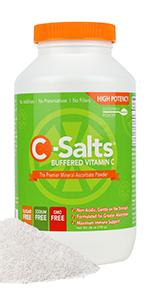 |
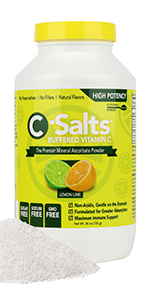 |
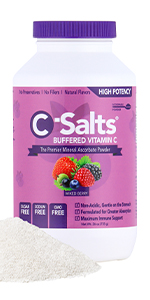 |
 |
|
|---|---|---|---|---|
| Try Original C-SALTS | Try Lemon Lime C-SALTS | Try Mixed Berry C-SALTS | Try Blood Orange C-SALTS | |
| 40+ Years Of Results | ✓ | ✓ | ✓ | ✓ |
| Wholesome Immune Support | ✓ | ✓ | ✓ | ✓ |
| Just Add Water | ✓ | ✓ | ✓ | ✓ |
| Energize and Revitalize | ✓ | ✓ | ✓ | ✓ |
| Convenient And Good For You | ✓ | ✓ | ✓ | ✓ |