
Ascorbic Acid vs. Buffered Vitamin C: Which Powder Is Better?
Trying to decide between ascorbic acid powder and buffered vitamin C powder? Both provide vitamin C, an essential nutrient that supports normal immune function, collagen formation, and antioxidant protection. However, they differ in acidity, formulation, mineral content, and available product options.
This guide compares ascorbic acid with buffered vitamin C to help you understand the differences and choose a powder that fits your needs.
What Is Ascorbic Acid?
Ascorbic acid is the standard form of vitamin C found in many supplements. It is acidic and is commonly available as tablets, capsules, and powder.
Pure ascorbic acid powder typically contains vitamin C without added buffering minerals. It is a straightforward option for people who prefer a single-ingredient supplement.
Ascorbic acid is well studied and provides the same essential vitamin C nutrient as buffered forms.
What Is Buffered Vitamin C?
Buffered vitamin C generally contains mineral ascorbates, such as calcium ascorbate, sodium ascorbate, or potassium ascorbate.
These forms are less acidic than plain ascorbic acid. Buffered vitamin C may appeal to people who prefer a lower-acid supplement, although individual digestive tolerance varies.
Some buffered vitamin C powders combine multiple mineral compounds, while others use a single mineral ascorbate. The exact formulation depends on the product.
Buffered Vitamin C vs. Ascorbic Acid: Comparison
| Feature | Ascorbic Acid | Buffered Vitamin C |
|---|---|---|
| Acidity | Acidic | Generally lower acidity |
| Vitamin C | Yes | Yes |
| Mineral content | No added minerals in pure form | Contains minerals associated with the ascorbate salts |
| Digestive tolerance | May cause discomfort in some people | Lower-acid option; tolerance varies |
| Available as powder | Yes | Yes |
| Flavor options | Often unflavored | Unflavored and flavored options available |
| Cost per serving | Varies by brand and serving size | Varies by formulation, brand, and serving size |
Ascorbic Acid Powder vs. Buffered Vitamin C Powder
Both forms are available as powders that can be mixed into water or other beverages. The main differences involve acidity, mineral ingredients, flavor, and product formulation.
1. Acidity
Ascorbic acid powder is naturally acidic. Buffered vitamin C powders generally have lower acidity because they contain mineral ascorbates or other buffering ingredients.
People looking for a low-acid vitamin C powder may prefer a buffered formulation, although lower acidity does not guarantee better digestive tolerance.
2. Mineral Content
Pure ascorbic acid does not contain added minerals. Buffered vitamin C powders may supply calcium, magnesium, potassium, sodium, or other minerals depending on their ingredients.
Always check the Supplement Facts label to understand which minerals are included and in what amounts.
3. Taste and Flavor Options
Unflavored ascorbic acid powder typically has a tart, acidic taste. Buffered vitamin C powders may taste different depending on the buffering minerals and other ingredients.
Some buffered vitamin C products are available in flavored varieties for people who prefer mixing their supplements into a beverage.
4. Cost Per Serving
When comparing vitamin C powders, look beyond the bottle price. Compare the number of servings, the amount of vitamin C per serving, and the total cost per serving.
Larger containers may offer better value, but the best choice depends on the product price, serving size, and how frequently you use vitamin C.
Is Buffered Vitamin C Easier on the Stomach?
Some people prefer buffered vitamin C because it is less acidic than traditional ascorbic acid. However, lower acidity does not guarantee better digestive tolerance, and research has not established that buffered vitamin C is consistently better tolerated by everyone.
Higher doses of vitamin C, regardless of form, may cause nausea, abdominal cramps, or diarrhea.
For additional information, read our Stomach-Friendly Vitamin C Guide.
Is Buffered Vitamin C Better Absorbed?
There is no strong evidence that mineral ascorbates are consistently better absorbed than standard ascorbic acid. Both can provide vitamin C to the body.
The best choice often depends on personal preference, formulation, serving size, and individual tolerance.
What Is C-Salts Buffered Vitamin C Powder?
C-Salts® is a buffered vitamin C powder formulated with mineral ascorbates and electrolytes. It provides 2,000 mg of vitamin C per serving and is available in Original, Lemon Lime, Blood Orange, and Mixed Berry flavors.
C-Salts is designed for people seeking a low-acid alternative to traditional ascorbic acid powder. It is vegan, Non-GMO, and sugar-free.

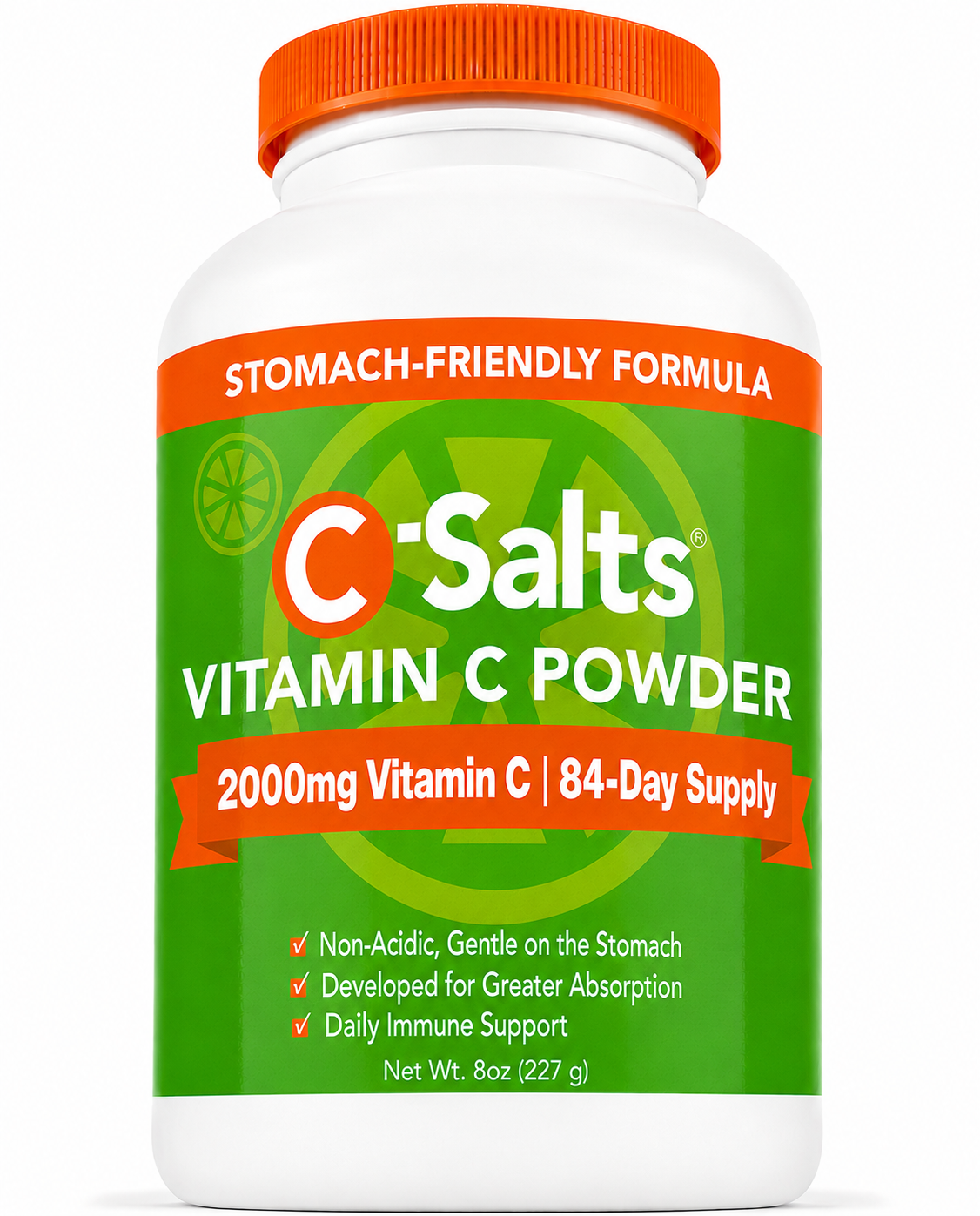
STOMACH-FRIENDLY BUFFERED VITAMIN C
Meet C-Salts® Buffered Vitamin C Powder
2,000 mg Vitamin C Per Serving + Electrolytes
Looking for an alternative to regular ascorbic acid powder? C-Salts combines buffered vitamin C with electrolytes in a convenient, low-acid powder.
- 2,000 mg vitamin C per serving
- Low-acid buffered formulation
- Vitamin C plus electrolytes
- Vegan, Non-GMO and sugar-free
- Four flavors and two bottle sizes
Trusted for Over 50 Years
Frequently Asked Questions
Is buffered vitamin C the same as ascorbic acid?
Both supply vitamin C. Buffered forms typically use mineral ascorbates that are less acidic than plain ascorbic acid.
Does buffered vitamin C contain electrolytes?
Some buffered vitamin C formulas contain minerals such as sodium or potassium. The amounts vary by product, so check the Supplement Facts label.
Can I take buffered vitamin C every day?
Vitamin C is needed daily, but supplement doses should be appropriate for individual needs. For most adults, the tolerable upper intake level is 2,000 mg per day from all sources combined. Consult a healthcare professional if you have medical conditions or questions about high-dose supplementation.
Which vitamin C powder should I choose?
Choose based on your preferred acidity, ingredients, dose, taste, and budget. Plain ascorbic acid is a straightforward option, while buffered vitamin C offers a lower-acid alternative.
Is ascorbic acid powder the same as vitamin C powder?
Ascorbic acid powder is one form of vitamin C powder. However, not every vitamin C powder contains only ascorbic acid. Some products use mineral ascorbates or buffered formulations that have lower acidity.
Is buffered vitamin C powder worth the extra cost?
That depends on the product and your preferences. Some shoppers value lower acidity, added minerals, or flavor choices. Compare the vitamin C amount, ingredients, serving count, and cost per serving before deciding. Buffered vitamin C is not necessarily more expensive in every case.
Learn More About Vitamin C Powder
Explore our additional guides to understand the different types of vitamin C powder and how to choose the right formulation.
This article is for general educational purposes and is not a substitute for individualized medical advice.