Non-Acidic Vitamin C Powder: Benefits, Types & Buying Guide
Looking for non-acidic vitamin C powder? Many shoppers use this term when searching for buffered or low-acid alternatives to traditional ascorbic acid. This guide explains the differences, available forms, and how to choose a formula that fits your needs.
What Is Non-Acidic Vitamin C?
Non-acidic vitamin C is a commonly used shopping term for vitamin C formulated with mineral ascorbates, such as calcium ascorbate or sodium ascorbate. These forms are generally less acidic than pure ascorbic acid. However, the actual acidity of a finished supplement depends on its formulation. The term does not guarantee a completely acid-free product.
Buffered Vitamin C vs. Regular Vitamin C
| Feature | Regular Ascorbic Acid | Buffered Vitamin C |
|---|---|---|
| Form | Ascorbic acid | Mineral ascorbates or buffered blends |
| Acidity | Acidic | Typically less acidic; varies by formula |
| Minerals | No minerals inherent to pure ascorbic acid | May provide calcium, sodium, or other minerals |
| Stomach Comfort | Individual tolerance varies | Some people prefer lower-acid formulas; tolerance varies |

LOW-ACID BUFFERED VITAMIN C
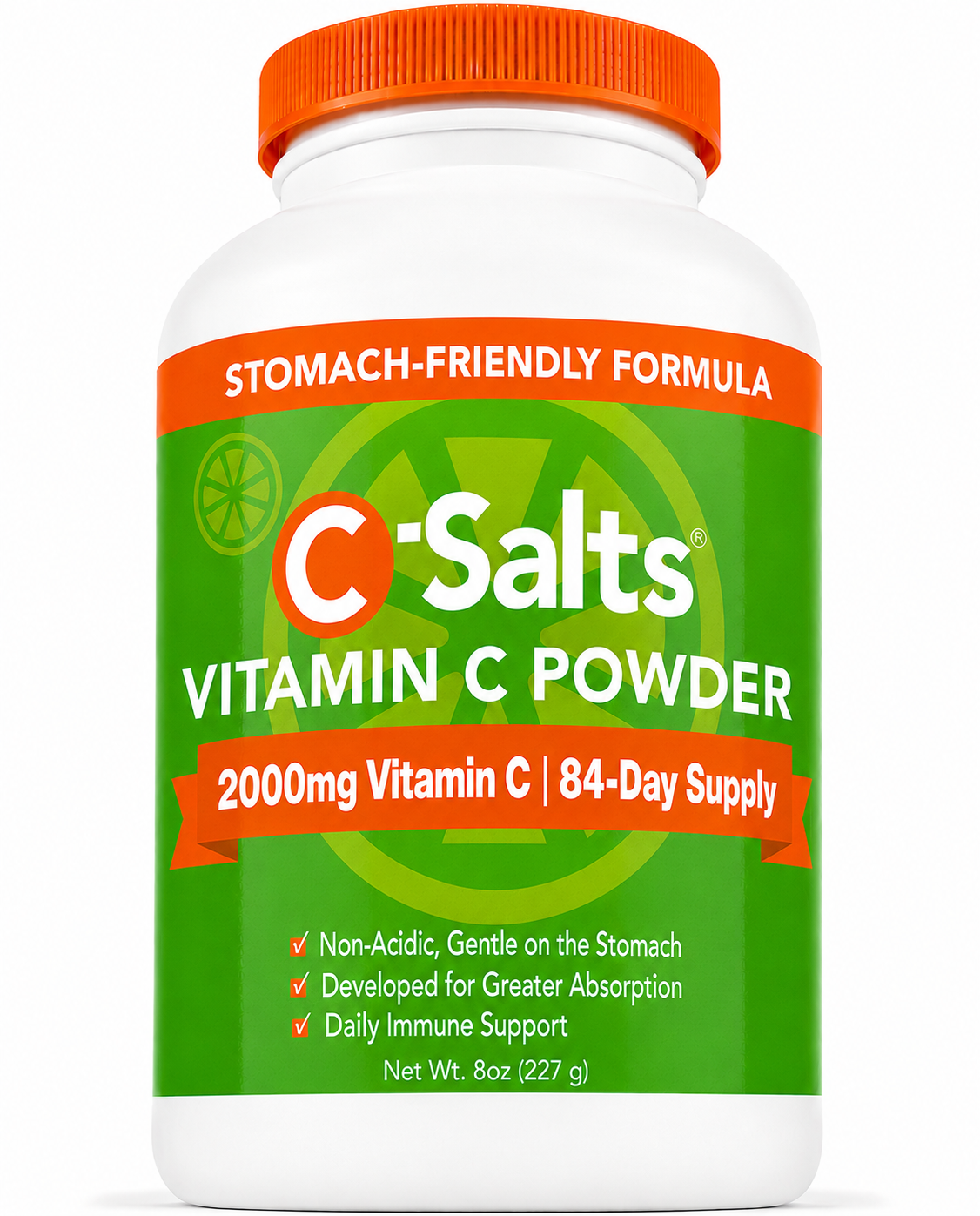
Looking for Low-Acid Vitamin C? Meet C-Salts®
2,000 mg Vitamin C Per Serving + Electrolytes
C-Salts® Buffered Vitamin C Powder offers a stomach-friendly, low-acid alternative to traditional ascorbic acid powder.
- Buffered vitamin C with electrolytes
- Vegan, Non-GMO and sugar-free
- Available in four flavors
- Trusted for over 50 years
Explore a low-acid vitamin C option from a brand trusted for over 50 years.
What Types of Low-Acid Vitamin C Are Available?
Calcium Ascorbate
Calcium ascorbate is a mineral ascorbate that supplies vitamin C along with calcium. It is commonly used in buffered vitamin C supplements.
Sodium Ascorbate
Sodium ascorbate supplies vitamin C along with sodium. It is generally less acidic than pure ascorbic acid. People limiting sodium intake should check the supplement's sodium content.
Buffered Vitamin C Blends
Some buffered vitamin C powders combine different mineral ascorbates. These formulas may include calcium, magnesium, potassium, or other minerals. The specific mineral profile varies by product.
How to Choose the Best Non-Acidic Vitamin C Powder for Your Needs
When comparing non-acidic or low-acid vitamin C powders, consider the following:
- Vitamin C form: Look for mineral ascorbates or other buffering ingredients.
- Vitamin C dosage: Compare the amount provided per serving.
- Mineral content: Review sodium, calcium, and other minerals based on your dietary needs.
- Ingredients: Compare flavored and unflavored formulas.
- Value: Consider the cost per serving rather than bottle price alone.
- Personal tolerance: A lower-acid formula does not guarantee freedom from digestive discomfort.
Why Choose C-Salts Buffered Vitamin C Powder?
C-Salts® combines buffered vitamin C with electrolytes in a convenient powder. Each serving provides 2,000 mg of vitamin C.
Available flavors include Original, Lemon Lime, Blood Orange and Mixed Berry. Choose from 8 oz and 26 oz sizes.
C-Salts is a useful option for shoppers comparing buffered vitamin C powders who want a low-acid formula with multiple flavor choices.
Frequently Asked Questions About Non-Acidic Vitamin C
Is buffered vitamin C the same as non-acidic vitamin C?
The terms are often used interchangeably in shopping searches, but they are not precise synonyms. Buffered vitamin C is formulated to reduce acidity. The finished product's actual acidity depends on its ingredients and formulation.
Is non-acidic vitamin C easier on the stomach?
Some people prefer buffered vitamin C because it is generally less acidic than traditional ascorbic acid. Individual tolerance varies, and lower acidity does not guarantee that a supplement will prevent digestive discomfort.
What is the difference between ascorbic acid and sodium ascorbate?
Ascorbic acid is the acidic form of vitamin C. Sodium ascorbate is a sodium salt of ascorbic acid and is generally less acidic in solution.
Does buffered vitamin C work as well as regular vitamin C?
Both ascorbic acid and mineral ascorbates supply vitamin C. There is not strong evidence that buffered forms provide superior vitamin C absorption or general health benefits for most people.
Which non-acidic vitamin C powder should I choose?
Compare the vitamin C form, dosage, mineral content, ingredients, personal tolerance and cost per serving. C-Salts is one option for shoppers looking for a buffered vitamin C powder with electrolytes.
Ready to Explore Buffered Vitamin C?
Discover C-Salts® low-acid vitamin C powder in four flavors and two convenient sizes.
Related reading: Best Stomach-Friendly Vitamin C Guide
This article is for educational purposes and is not a substitute for individualized medical advice. Consult a healthcare professional if you have a medical condition or take medication.