
Vitamin C Powder vs. Tablets and Capsules: Which Is Better?
Choosing between vitamin C powder, tablets, and capsules can be confusing. All three forms can provide vitamin C, but they differ in convenience, serving flexibility, ingredients, taste, and cost per serving.
This guide explains the differences between vitamin C powder and pills, whether one form is better absorbed, and what to consider when choosing a vitamin C supplement.
Vitamin C Powder vs. Tablets vs. Capsules
| Feature | Vitamin C Powder | Vitamin C Tablets | Vitamin C Capsules |
|---|---|---|---|
| Form | Loose powder mixed into a beverage | Compressed solid tablet | Powder or granules inside a capsule |
| Serving flexibility | May allow adjustable portions when accurately measured | Usually fixed amount per tablet | Usually fixed amount per capsule |
| Convenience | Requires measuring and mixing | Convenient for travel | Convenient for travel |
| Taste | Unflavored and flavored options | Generally little taste when swallowed | Generally little taste when swallowed |
| Ingredients | Depends on formulation | May contain binders or coatings | Includes capsule shell and other ingredients as applicable |
| Cost per serving | Varies; large containers may offer value | Varies by brand and strength | Varies by brand and strength |
What Are the Advantages of Vitamin C Powder?
1. Flexible Serving Options
Some vitamin C powders allow users to measure different serving amounts according to the manufacturer's directions. This can offer flexibility compared with tablets or capsules containing a fixed amount.
Accurate measurement is important. Always follow the product label and avoid assuming that a household spoon provides a precise dose.
2. No Pills to Swallow
Vitamin C powder can be mixed with water or another suitable beverage. This may appeal to people who prefer not to swallow tablets or capsules.
3. Flavored and Unflavored Choices
Vitamin C powders are available in different formulations, including plain ascorbic acid, mineral ascorbates, and flavored buffered vitamin C blends.
4. Potential Cost Savings
Some larger vitamin C powder containers offer a lower cost per serving than smaller packages. However, this is not always the case.
Compare the price, vitamin C amount, and number of servings before deciding which product offers the best value.
What Are the Advantages of Vitamin C Tablets and Capsules?
Tablets and capsules are convenient for people who want premeasured servings without mixing a powder.
- Easy to carry while traveling
- No measuring or preparation required
- Usually little or no noticeable taste when swallowed
- Available in a wide range of vitamin C strengths
The best format depends on personal preference, ingredients, cost, and how you plan to use the supplement.
Is Vitamin C Powder Better Absorbed Than Tablets?
There is no strong evidence that vitamin C powder is consistently better absorbed than standard vitamin C tablets or capsules.
Vitamin C absorption depends on factors such as dose, formulation, and individual physiology. The physical form alone does not establish superior absorption.
At higher doses, the percentage of vitamin C absorbed generally decreases. Taking more vitamin C does not necessarily mean the body absorbs proportionally more.
Is Buffered Vitamin C Powder Less Acidic?
Vitamin C powder is available in both acidic and buffered formulations.
Traditional ascorbic acid powder is acidic. Buffered vitamin C powders generally contain mineral ascorbates or other buffering ingredients that reduce acidity.
Some people prefer lower-acid vitamin C products, although digestive tolerance varies and buffered vitamin C is not guaranteed to prevent stomach discomfort.
Learn more in our Non-Acidic Vitamin C Powder Guide.
What Should You Look for When Buying Vitamin C Powder?
- Vitamin C per serving: Compare the labeled amount and consider your total daily intake.
- Formulation: Choose between ascorbic acid and buffered vitamin C.
- Minerals: Review any added calcium, magnesium, potassium, or sodium.
- Flavor: Consider whether you prefer plain or flavored powder.
- Ingredients: Check sweeteners, flavors, and other ingredients.
- Value: Compare the cost per serving rather than the bottle price alone.
Looking for a Buffered Vitamin C Powder? Meet C-Salts
C-Salts® Buffered Vitamin C Powder offers a low-acid alternative to traditional ascorbic acid powder. It combines vitamin C with electrolyte minerals and is available in four flavors and two bottle sizes.

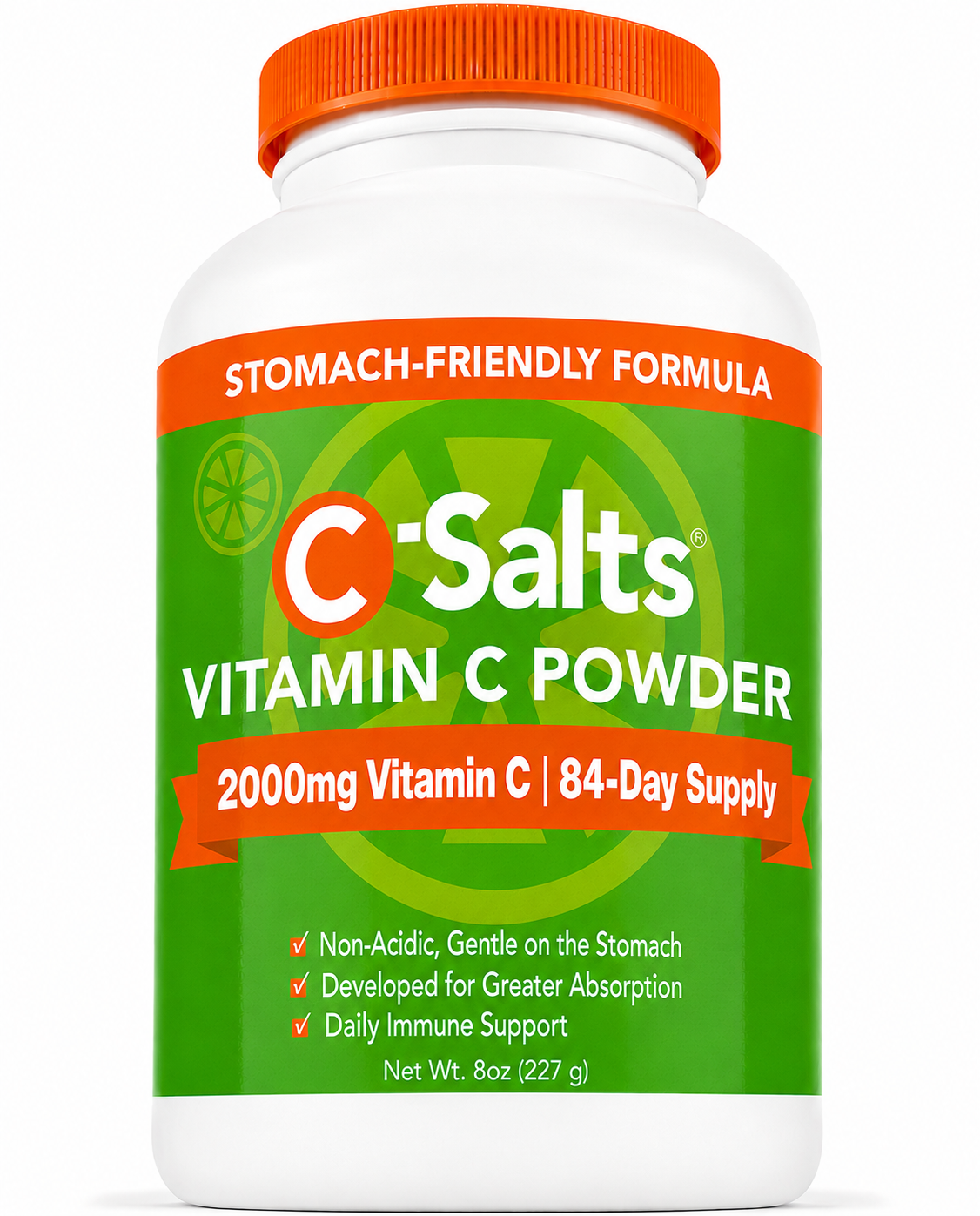
LOW-ACID BUFFERED VITAMIN C
Discover C-Salts® Vitamin C Powder
2,000 mg Vitamin C Per Serving + Electrolytes
Enjoy a buffered vitamin C powder that mixes into beverages without the need to swallow tablets or capsules.
- 2,000 mg vitamin C per labeled serving
- Stomach-friendly, low-acid buffered formula
- Vitamin C plus electrolytes
- Vegan, Non-GMO and sugar-free
- Original, Lemon Lime, Blood Orange and Mixed Berry
- Available in 8 oz and 26 oz sizes
Trusted for Over 50 Years
Frequently Asked Questions
Is vitamin C powder better than pills?
Neither form is automatically better. Vitamin C powder offers mixing flexibility, while tablets and capsules provide convenient premeasured servings. The best choice depends on personal needs and preferences.
Does vitamin C powder absorb faster than tablets?
Powder dissolves before ingestion when mixed into a beverage, but this does not establish that it provides better overall absorption or health benefits than tablets or capsules.
Can you take vitamin C powder every day?
Vitamin C is an essential nutrient needed daily. Supplement amounts should be appropriate for individual needs. For most adults, the tolerable upper intake level is 2,000 mg per day from all sources combined.
Is vitamin C powder easier on the stomach?
Digestive tolerance depends on the dose and formulation. Buffered vitamin C powders are generally less acidic than plain ascorbic acid, but lower acidity does not guarantee freedom from digestive discomfort.
Is vitamin C powder cheaper than capsules?
Sometimes. Large powder containers may provide a lower cost per serving, but prices vary. Compare the amount of vitamin C per serving, total servings, and current selling price.
Can I mix vitamin C powder with water?
Many vitamin C powders are designed to be mixed with water. Follow the manufacturer's mixing instructions and serving directions.
More Vitamin C Buying Guides
- Best Stomach-Friendly Vitamin C Guide
- Non-Acidic Vitamin C Powder Guide
- Explore C-Salts Buffered Vitamin C Powder
This article is provided for educational purposes and is not a substitute for individualized medical advice. Consult a healthcare professional about supplementation if you have a medical condition or take medication.